

These figures reflect final sold prices from completed online auctions, mostly Bring a Trailer and Cars & Bids; unsold cars and bids below reserve are excluded. Competitive bidding and well-presented cars can bring stronger prices than typical private sales, so we show the median and a fair range covering the middle 50% of results.
Download a printable PDF of this guide — free, no email or sign-up required. Figures in the PDF match this page and are updated when the site is rebuilt.
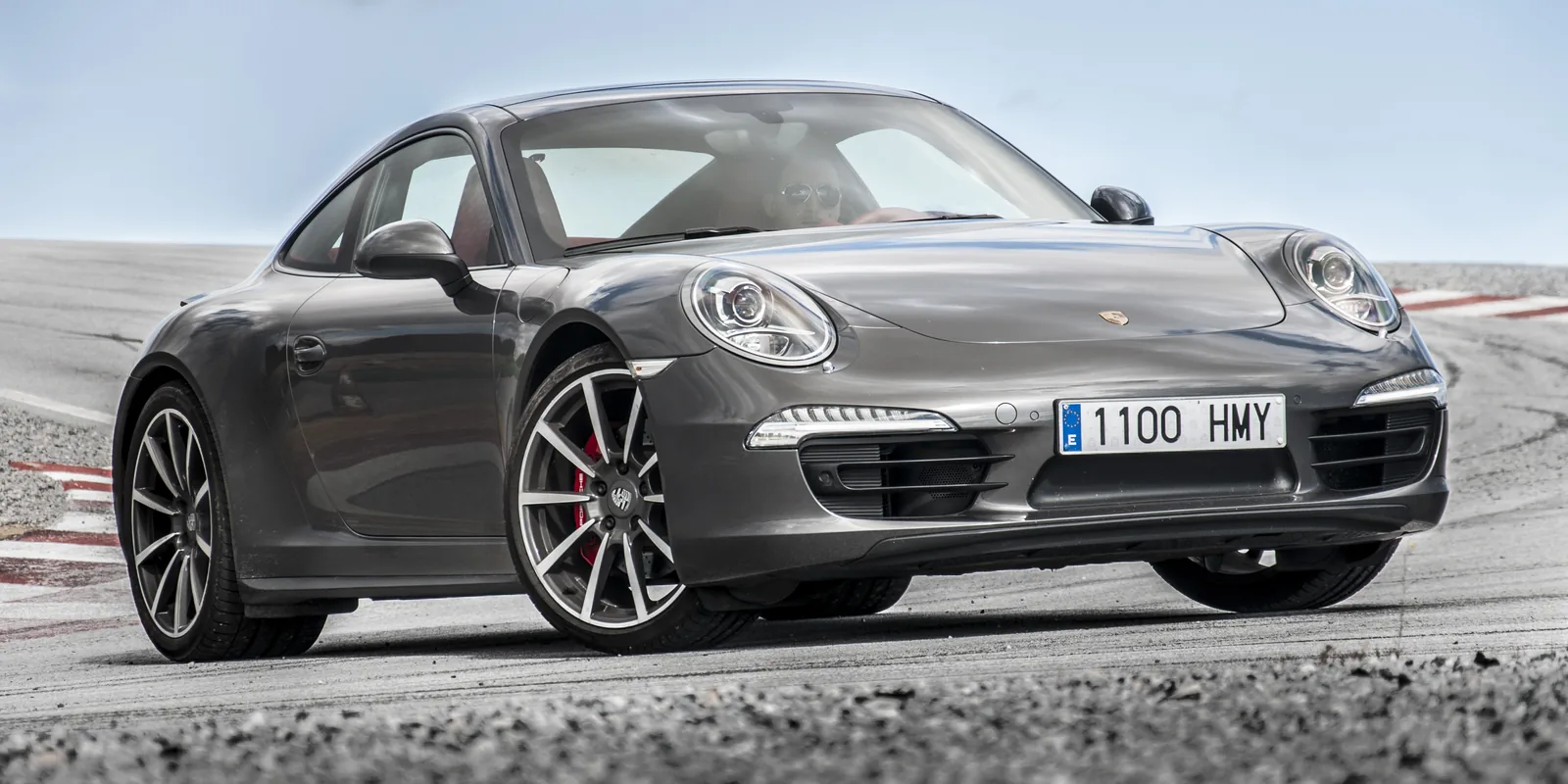

The 991 (model years 2012–2019) is the used 911 people shop when a 997 feels a generation back and a 992 still feels like a new-car purchase. It is longer in wheelbase than the 997, quieter on a trip, and split by a facelift that changed the character of the Carrera engines.
The 991 overall had a $118,911 median from 417 U.S.-dollar sales, with the middle half selling between $85,600 and $198,000. Sales in this window ran from $40,750 to $1,000,000. Of 266 sales with a known mileage, the median odometer reading was 17,000 miles. Of the 266 sales with a known mileage, cars at or under 17,000 miles had a $201,500 median against $94,750 for higher-mileage cars.
As with every modern 911 page, Turbo and GT cars pull the overall median up. A Carrera S is better priced from its trim or generation page.
Manual cars had a $110,996 median (124 sales) against $90,496 for PDK cars (114). Model year and mileage still differ between the two groups.
What these cars have been selling for
| Generation | Model years | Median | Middle 50% | USD sales | Median mileage |
|---|---|---|---|---|---|
| 911 (991.1) | 2012–2016 | $92,500 | $72,400–$134,200 | 212 | 25,000 miles |
| 911 (991.2) | 2017–2019 | $150,000 | $110,000–$278,000 | 205 | 12,000 miles |
Medians and the middle 50% use the same snapshot window as the matching value page (last 12 months, or the full sample if that window is thin). Mileage is the median odometer reading among sales in that window with a known mileage. All figures are U.S. dollars only.
Generation differences
991.1 cars (2012–2016) used naturally aspirated Carrera engines: 3.4 liters in the base car, 3.8 in the S and GTS. 991.2 cars (2017–2019) switched the Carrera line to a 3.0-liter twin-turbo engine, added more cabin and driver-assist equipment, and kept the same basic body. A 991.1 and a 991.2 Carrera do not feel the same to drive, and they do not sell for the same money. Shop them as two cars that share a shape.
Known issues
991.1: bore scoring on some 3.8-liter cars, and a thorough engine inspection anyway
The 991 left behind the 997.1 intermediate-shaft bearing, which is the headline mechanical win over an earlier Carrera. That does not mean the 991.1 engine is maintenance-free. Bore scoring has been reported on some 3.8-liter 991.1 S and GTS cars. A borescope, a cold-start listen, and an oil inspection still belong in the pre-purchase work. Water pumps, coolant fittings and the air-oil separator also appear on inspection lists as these cars age.
991.2: turbocharged Carreras
The 991.2 Carrera's 3.0-liter twin-turbo engine changed the way the car makes power — smoother, earlier torque, a different sound. Inspect for cooling-system work, intake and charge-air plumbing condition, and a clean history of software updates and campaigns. Turbocharger wear is not a routine 40,000-mile item, but a car that has been tracked or poorly serviced is a different story. Direct injection means intake-valve carbon can build over time.
PDK, steering and the rest of the chassis
Most 991s were sold with PDK. A documented fluid service and a test drive that covers crawl speed, part throttle and a kickdown should be non-negotiable. The electrically assisted steering is a taste question for some 997 drivers; check for tightness, a dead spot, or a warning light rather than for 'feel' alone. PASM, carbon-ceramic brakes (if fitted), and wide staggered tires are the usual running-cost surprises. Door handles, window regulators and the occasional infotainment freeze are annoyances, not reasons to write off an otherwise clean car.
GT3, GT2 and Turbo models
These are specialist cars with specialist prices. Early 991.1 GT3 engines were the subject of a factory campaign; any GT3 you look at should come with a paper trail that a knowledgeable shop can verify. Do not price a GT3, GT2 or Turbo off the overall 991 median, and do not skip a specialist inspection because the car is 'newer than a 997.'
What to inspect before you buy
- Specialist inspection, with a borescope on 991.1 3.8-liter cars and a full scan on any 991.
- PDK service records and a wide-ranging test drive; clutch and synchro feel on the rarer manuals.
- Cooling system, underside leaks, and evidence of track use (brake wear, aftermarket belts, heat-soaked bushings).
- Tire date codes and a clear answer on carbon-ceramic versus iron brakes.
- A VIN recall and campaign check, especially on GT cars.
- Price the car against the 991.1 or 991.2 page, and against the matching trim page if you are looking at an S, GTS, Turbo or GT3.
Value pages for this guide
Frequently asked questions
991.1 or 991.2?
Choose 991.1 if you want a naturally aspirated Carrera and will inspect the engine carefully; choose 991.2 if you want the later interior, the turbocharged Carrera powerband, and usually a higher purchase price. The 991.1 vs 991.2 sold prices on the generation pages are the right first filter.
Is a 991 a safer buy than a 997?
It avoids the 997.1 Carrera intermediate-shaft bearing, which is a real difference, and it is a newer car. It is not a no-inspection car, and it costs more to buy and to tire. Compare them on the 997 vs 991 page and then inspect the actual car.
More Porsche price guides
- Porsche values by generation
- Cheapest Porsches to buy right now
- Manual vs automatic Porsche prices
- Used 997 buyer's guide
- Used 996 buyer's guide
- Used 987 & 981 Boxster and Cayman buyer's guide
- Used Cayenne 958 & 9Y0 buyer's guide
- Used Macan 95B buyer's guide
- Best Porsche under $30,000
- Best Porsche under $50,000
- Best Porsche under $75,000
- Best Porsche under $100,000
- All guides and trim price pages
Published Nov 24, 2026. Figures last updated Nov 20, 2026 and rebuilt weekly from the latest sample. This is a buying checklist and a market snapshot, not an appraisal.