

These figures reflect final sold prices from completed online auctions, mostly Bring a Trailer and Cars & Bids; unsold cars and bids below reserve are excluded. Competitive bidding and well-presented cars can bring stronger prices than typical private sales, so we show the median and a fair range covering the middle 50% of results.
Download a printable PDF of this guide — free, no email or sign-up required. Figures in the PDF match this page and are updated when the site is rebuilt.
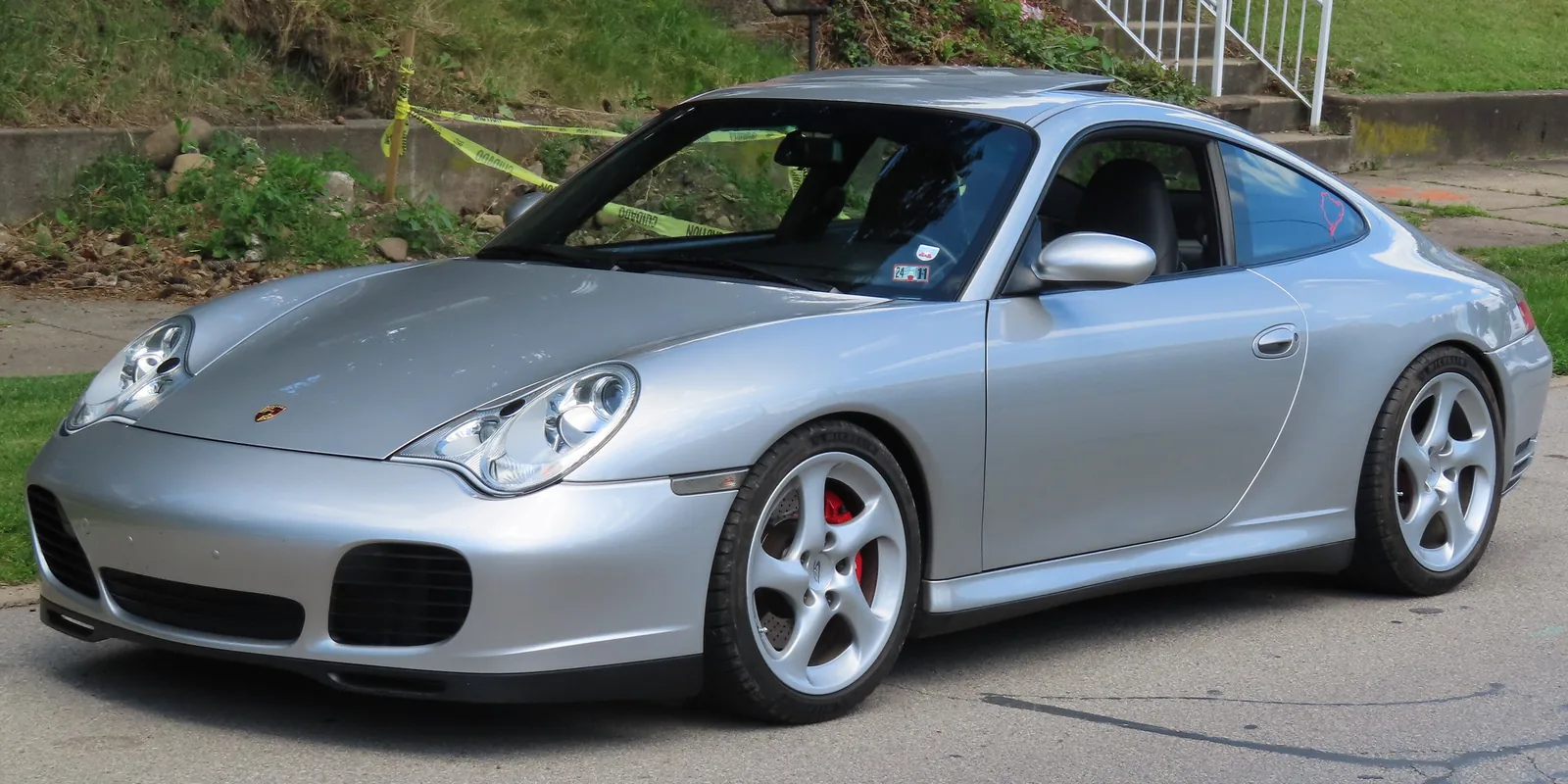

The 996 (model years 1999–2005) is still the least expensive way into a water-cooled 911, and that is both the appeal and the trap. A tidy, well-sorted Carrera can be a lot of car for the money. A neglected one can absorb the purchase price again in engine work.
The 996 overall had a $36,250 median from 525 U.S.-dollar sales, with the middle half selling between $27,000 and $62,000. Sales in this window ran from $4,600 to $500,000. Of 259 sales with a known mileage, the median odometer reading was 42,000 miles. Of the 259 sales with a known mileage, cars at or under 42,000 miles had a $65,750 median against $34,716 for higher-mileage cars.
996.1 Carrera cars (1999–2001) used a 3.4-liter engine; 996.2 cars (2002–2005) moved to a 3.6-liter engine and a facelifted body. Turbo, GT2 and GT3 models used a different engine and are counted on the 996 and trim pages, not in the 996.1 / 996.2 Carrera split. Those high-performance cars sell in a different league from a Carrera and should be priced from their own pages.
Manual cars had a $37,375 median (442 sales) against $24,000 for Tiptronic cars (57). Model year and mileage still differ between the two groups.
What these cars have been selling for
| Generation | Model years | Median | Middle 50% | USD sales | Median mileage |
|---|---|---|---|---|---|
| 911 (996.1) | 1999–2001 | $29,000 | $22,500–$35,200 | 198 | 48,000 miles |
| 911 (996.2) | 2002–2005 | $33,830 | $26,100–$44,400 | 182 | 47,000 miles |
Medians and the middle 50% use the same snapshot window as the matching value page (last 12 months, or the full sample if that window is thin). Mileage is the median odometer reading among sales in that window with a known mileage. All figures are U.S. dollars only.
Generation differences
Think of a used 996 in three groups, not one: early Carreras (996.1), later Carreras (996.2), and the Turbo / GT cars. The first two share the M96 engine family and the issues below; the third does not. Cosmetic cues such as the 'fried egg' headlights on early cars are a taste question. The engine and the records are not.
Known issues
Intermediate-shaft bearing
This is the 996 issue every buyer has heard of, and it is still the one that matters most on Carrera cars. The bearing supports the intermediate shaft in the M96 engine. When it fails, the result can be a destroyed engine. Early dual-row bearings and later single-row bearings are not the same, and internet shorthand about 'which years are safe' is a poor substitute for records on the actual car. Ask what was done, when, and by whom: a quality retrofit, a recent inspection, or a rebuild that addressed the bearing. Budget for that work if it has not been done, or buy a different car. Turbo, GT2 and GT3 engines are a different design.
Bore scoring and rear main seal
Bore scoring is reported on 996 Carreras as well as on later M96/M97 cars. A borescope before purchase is the cheapest insurance you can buy. The rear main seal is a frequent seep; many owners do it when the transmission is already out for a clutch or bearing retrofit. Oil at the bottom of the bellhousing is a clue, not a reason to panic on its own, but it should be in the inspection notes.
Coolant pipes, water pump and air-oil separator
The original plastic coolant pipes become brittle with heat and time. Many cars have been updated to sturdier pipes; if this one has not, treat it as overdue work. Water pumps wear out. The air-oil separator can fail and show up as smoke, oil use, or odd intake noises. Look for coolant staining, a crusted residue on pipe joints, and a service history that mentions these jobs.
Electrics, headlights and the cabin
Window regulators, ignition coils and the occasional instrument-cluster gremlin show up on cars of this age. Early headlights are a style marker, not a reliability one. Check for moisture in the lamps, a tired convertible-style seal on the sunroof, and carpets that smell damp. None of these rival an engine issue, but they add up on a cheap car that has been deferred.
What to inspect before you buy
- A specialist inspection with a cylinder borescope, not a general used-car once-over.
- Written history of intermediate-shaft bearing work or inspection, plus coolant-pipe and water-pump records.
- Cold start, a long test drive once the engine is hot, and a check for oil or coolant leaks after the drive.
- Clutch feel on manuals; Tiptronic shift quality and fluid history on automatics.
- Evidence of track use, a replaced engine, or a rebuilt title — none are automatic deal-breakers, but the price has to reflect them.
- Underside, radiators (front and the additional corner radiators) and any signs of frontal damage or poor crash repair.
- A VIN recall check and a title search that matches the seller's story.
Value pages for this guide
Frequently asked questions
Is a 996 a risky first 911?
It can be a good first 911 if you buy a documented car and keep a reserve for maintenance, or a poor one if you buy on price alone. The engine issues are well understood, which means a specialist can inspect for them. The 996 value page and the 996.1 and 996.2 pages show what tidy cars have actually been selling for.
Should I look at a 996 Turbo instead?
A 996 Turbo or GT3 uses a different engine and avoids the Carrera intermediate-shaft bearing, but you will pay more to buy and to run it. Price those cars from their trim pages, not from the overall 996 median, which is pulled down by Carreras.
More Porsche price guides
- Porsche values by generation
- Cheapest Porsches to buy right now
- Manual vs automatic Porsche prices
- Used 997 buyer's guide
- Used 987 & 981 Boxster and Cayman buyer's guide
- Used Cayenne 958 & 9Y0 buyer's guide
- Used Macan 95B buyer's guide
- Used 991 buyer's guide
- Best Porsche under $30,000
- Best Porsche under $50,000
- Best Porsche under $75,000
- Best Porsche under $100,000
- All guides and trim price pages
Published Nov 24, 2026. Figures last updated Nov 20, 2026 and rebuilt weekly from the latest sample. This is a buying checklist and a market snapshot, not an appraisal.