

These figures reflect final sold prices from completed online auctions, mostly Bring a Trailer and Cars & Bids; unsold cars and bids below reserve are excluded. Competitive bidding and well-presented cars can bring stronger prices than typical private sales, so we show the median and a fair range covering the middle 50% of results.
Download a printable PDF of this guide — free, no email or sign-up required. Figures in the PDF match this page and are updated when the site is rebuilt.
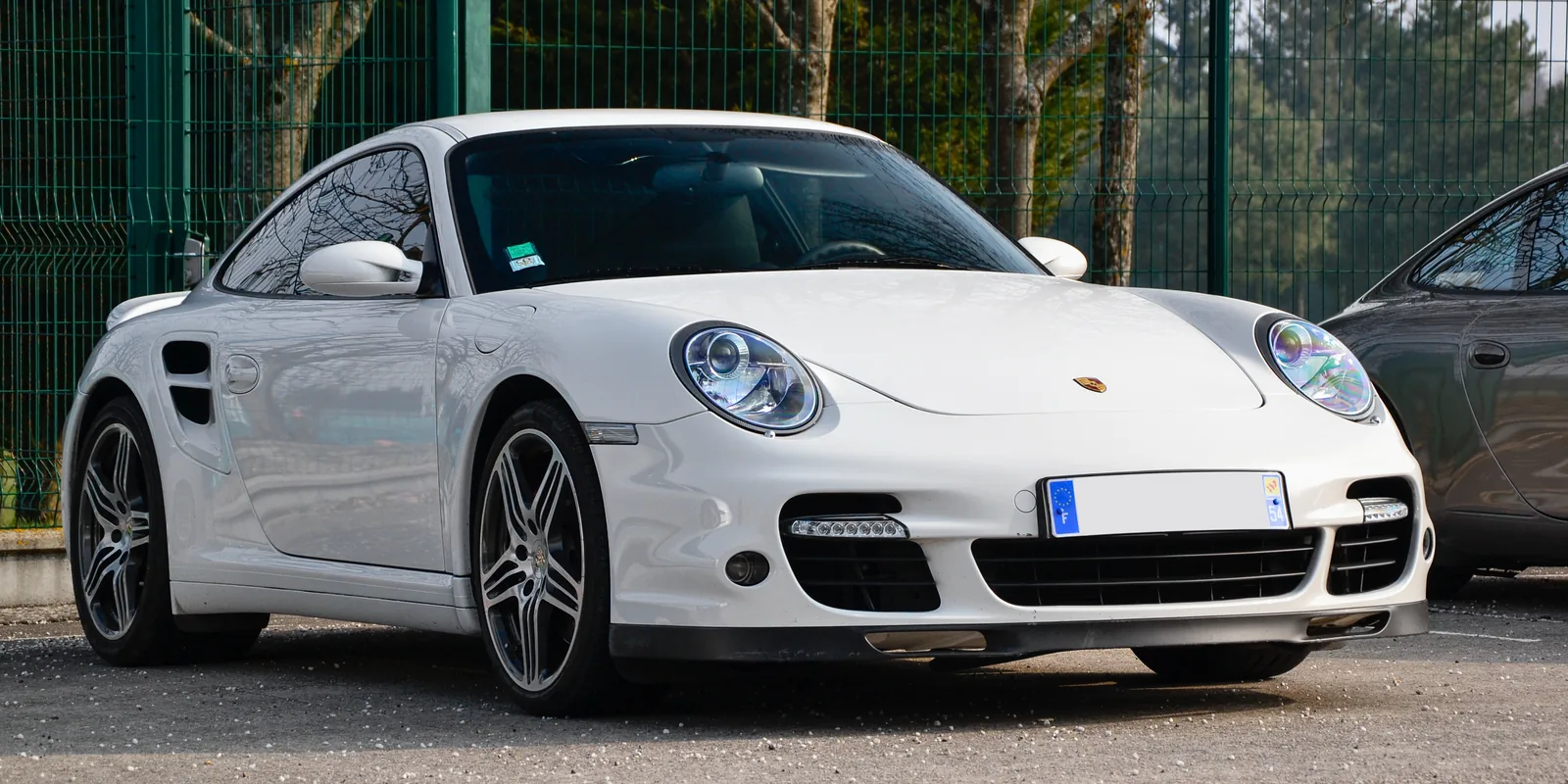

The 997 is the used 911 most shoppers compare first: classic headlights again after the 996, a cabin that still feels modern enough to live with, and a price spread that now runs from tidy Carreras into six-figure Turbo and GT cars. Carrera, Targa and GTS model years are 2005–2012; Turbo and GT models turned over a year later and run through 2013.
The 997 overall had a $71,000 median from 473 U.S.-dollar sales, with the middle half selling between $50,000 and $116,000. Sales in this window ran from $18,250 to $1,100,000. Of 276 sales with a known mileage, the median odometer reading was 34,000 miles. Of the 276 sales with a known mileage, cars at or under 34,000 miles had a $113,600 median against $67,000 for higher-mileage cars.
Those overall figures mix Carreras with Turbo and GT cars, so a typical Carrera often sits below the headline median. Use the generation and trim pages when you are shopping a specific car.
Manual cars had a $69,250 median (310 sales) against $62,166 for Tiptronic or PDK cars (77). Model year and mileage still differ between the two groups.
What these cars have been selling for
| Generation | Model years | Median | Middle 50% | USD sales | Median mileage |
|---|---|---|---|---|---|
| 911 (997.1) | 2005–2008 | $61,625 | $45,400–$92,600 | 304 | 37,000 miles |
| 911 (997.2) | 2009–2012 | $90,000 | $66,000–$132,000 | 169 | 27,000 miles |
Medians and the middle 50% use the same snapshot window as the matching value page (last 12 months, or the full sample if that window is thin). Mileage is the median odometer reading among sales in that window with a known mileage. All figures are U.S. dollars only.
Generation differences
The 997 splits cleanly into two halves, and the mechanical difference is the one that should drive your shortlist. 997.1 Carrera, Targa and GTS cars (model years 2005–2008) use the earlier M96/M97 engine family, with the intermediate-shaft bearing that 996 and 987.1 buyers already know about. Turbo, GT3 and GT2 cars in this era kept the earlier high-performance engine, which does not share that bearing design, and their generation change came a year later (997.1 through 2009, 997.2 from 2010–2013). 997.2 Carrera cars (2009–2012) moved to direct injection, gained the optional PDK gearbox, and left the intermediate-shaft bearing of the 997.1 behind.
Known issues
997.1 Carrera engine and the intermediate-shaft bearing
On 997.1 Carrera, Targa and GTS cars, the intermediate-shaft bearing is the issue that should be on every notes sheet. A failure can be engine-ending. Later 997.1 cars used a larger bearing than early 996s, which is better, not the same as 'solved.' Ask for records of a retrofit, a recent inspection, or an engine rebuild that addressed it. A pre-purchase inspection by a shop that sees these engines every week is worth more than a low asking price. Turbo, GT3 and GT2 cars use a different engine and are not part of this particular bearing story, though they have their own costs.
Bore scoring
Cylinder-wall wear, often called bore scoring, shows up most often on 997.1 3.8-liter S cars and is also reported on some 3.6-liter engines. A cold start that sounds rattly, scoring marks on the oil cap or under the oil filler, metallic residue in the oil, or a shop borescope that shows scuffed walls are all reasons to walk away or to price in an engine rebuild. Have the engine scoped before you buy, not after.
Rear main seal, air-oil separator, water pump and coolant pipes
A rear main seal seep is common and is often done at the same time as clutch or intermediate-shaft work because the engine or transmission comes out. The air-oil separator can fail and cause smoke, oil consumption or a whistling intake. The water pump and the plastic coolant pipes of this generation are wearable items; look for pink residue, a sweet smell, or records of a pipe upgrade to metal.
997.2: different engine, different checklist
997.2 Carreras left the intermediate-shaft bearing behind, which is the main reason many buyers pay the step up. Direct injection can leave carbon on the intake valves over time. PDK-equipped cars need a documented fluid service history; a neglected dual-clutch box is an expensive surprise. Bore scoring is less discussed than on 997.1 S cars but is not unheard of, so a borescope still belongs in the inspection. Water pumps and coolant pipes remain on the list.
Turbo and GT cars
A 997 Turbo, Turbo S, GT3 or GT2 is a different car and a different budget. The engines are stronger, parts and tires cost more, and the sold-price range sits well above a Carrera. Confirm the exact model year against the 997.1 / 997.2 cut (Turbo and GT models changed over later), and treat any modified or tracked car as a specialist purchase.
What to inspect before you buy
- A specialist pre-purchase inspection, including a borescope of the cylinders, before you commit.
- Service records that show engine-out work, an intermediate-shaft retrofit or inspection on 997.1 Carreras, and coolant-pipe or water-pump replacement.
- Cold start: listen for rattles, look for smoke, and check for oil or coolant residue around the filler, the rear of the engine and the undertray.
- On 997.2 cars with PDK, a documented fluid service and a test drive that includes low-speed crawl, full-throttle upshifts and a downshift that is smooth, not harsh.
- Clutch feel and engagement on manuals; a rear main seal seep often shows up as oil at the bottom of the bellhousing.
- Suspension wear (control arms, thrust arm bushings), brake condition, and tire age, not just tread depth.
- Sunroof drains and evidence of moisture in the cabin or under carpets, especially on cars from wet climates.
- A VIN check for open recalls, and a title and service history that match the car in front of you.
Value pages for this guide
Frequently asked questions
Should I buy a 997.1 or a 997.2?
If you want to avoid the 997.1 Carrera intermediate-shaft bearing, look at 997.2 Carreras, or at 997.1 Turbo and GT cars that use the other engine. A well-documented 997.1 Carrera with a retrofit and a clean borescope can still be a good buy; an undocumented one is a harder yes. Compare the generations on the 997.1 and 997.2 value pages.
Do Turbo and GT3 cars have the same engine issues?
No. 997 Turbo, GT3 and GT2 models used a different high-performance engine that does not share the Carrera intermediate-shaft bearing design. They still need a specialist inspection, and they sell for much more than a Carrera, so use the Turbo and GT trim pages rather than the overall 997 median.
More Porsche price guides
- Porsche values by generation
- Cheapest Porsches to buy right now
- Manual vs automatic Porsche prices
- Used 996 buyer's guide
- Used 987 & 981 Boxster and Cayman buyer's guide
- Used Cayenne 958 & 9Y0 buyer's guide
- Used Macan 95B buyer's guide
- Used 991 buyer's guide
- Best Porsche under $30,000
- Best Porsche under $50,000
- Best Porsche under $75,000
- Best Porsche under $100,000
- All guides and trim price pages
Published Nov 24, 2026. Figures last updated Nov 20, 2026 and rebuilt weekly from the latest sample. This is a buying checklist and a market snapshot, not an appraisal.